I attended an AI meetup at Stanford recently, the kind of event where everyone has a demo, a half-finished prototype, or at least a strong opinion about GPTs. We were all showing the apps we'd built, and swapping ideas over the latest models.
Then I met an 80-year-old man who completely stole the show for me.
He asked if he could take my picture. I said yes, thinking maybe he just wanted a memento from the event. But then he said, "Can I read you a poem?"
He did, right there in the middle of the meetup. It was a poem about me, inspired by what I was wearing, and the details he'd captured in that single photo. I wish I'd saved the words, but I remember being surprised at how personal and vivid it felt.
Then he showed me how he'd done it.
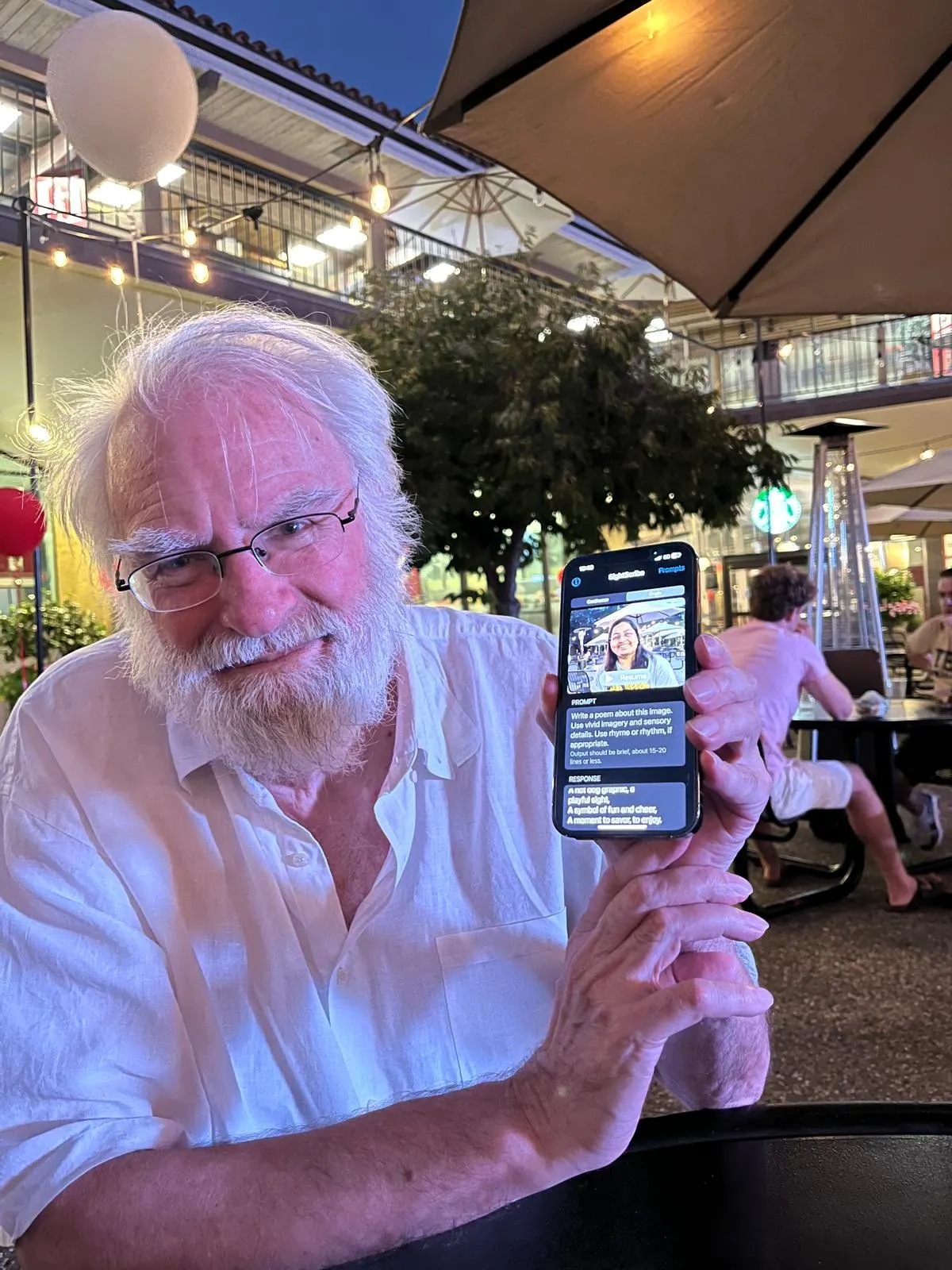
He had built an app called SightScribe. You take a picture, and the app sends it to a local large language model with the prompt:
"Write a poem about this image. Use vivid imagery and sensory details. Use rhyme or rhythm, if appropriate."
The result: a custom, AI-generated poem that is unique to every photo and moment.
Watching him proudly scroll through AI generated verses felt magical, not because of the tech, or the poem itself, but because of his curiosity. At 80, he wasn't just keeping up with AI. He was playing with it.
I snapped a picture of him holding his phone, his app open, my poem on the screen. I think about that image often, not just as a snapshot of a cool AI project, but as a reminder: AI probably isn't replacing human creativity, it's extending it (even at 80).